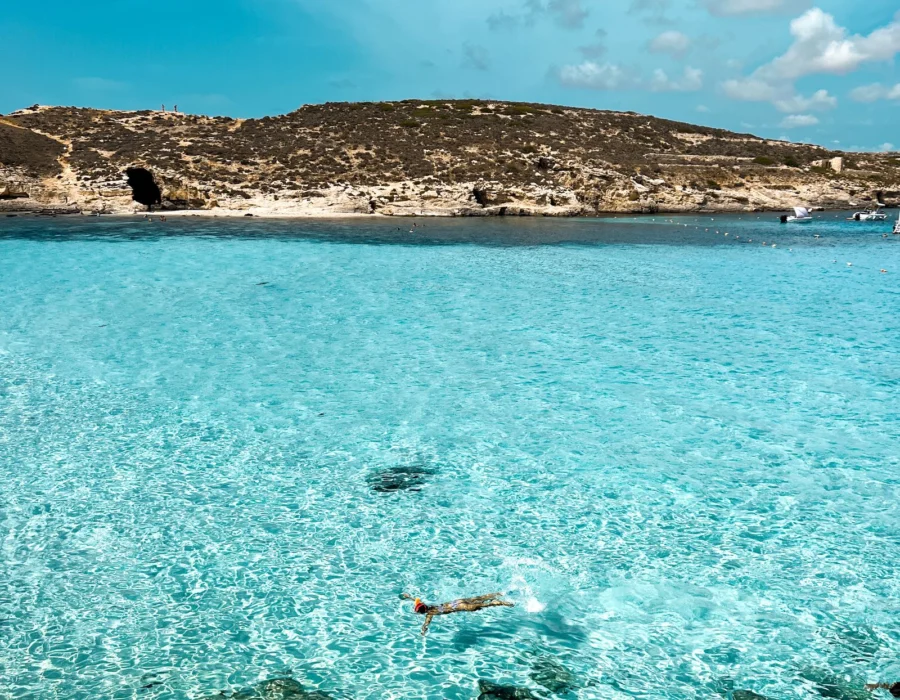
This site lists sixty-nine bays. Twelve of them are sand.
Thirty-nine are rock. The rest are pebble, artificial sand, or a mix of sand and rock in the same bay.
If you are picturing a beach holiday built on sand, twelve is the number to plan around.
Why there is so little of it
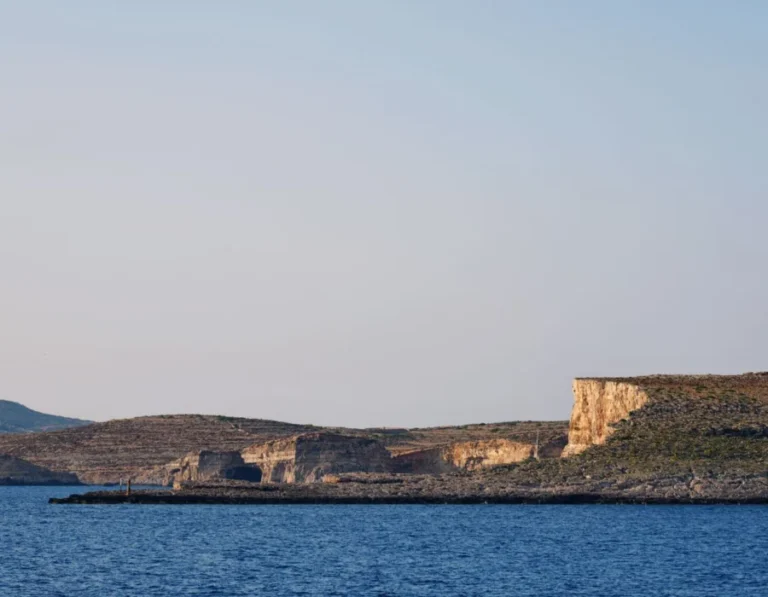
Malta is limestone. The coast is mostly low cliff and flat shelf.
Sand only collects where a valley reaches the sea and the bay is sheltered enough to hold it.
There are not many places where both are true, and the ones that exist are already famous.
Rock is not the poor relation
A flat limestone shelf gives you clear water straight off the edge, no sand in anything, and usually far fewer people.
The water is often clearer over rock, because nothing is being stirred up by the people already in it.
Bring something to lie on and shoes you can walk over sharp rock in. With those two things most of the coast opens up.
Many rock bays have ladders fixed into the shelf, which makes getting in and out easier than wading off sand.
Where the sand is
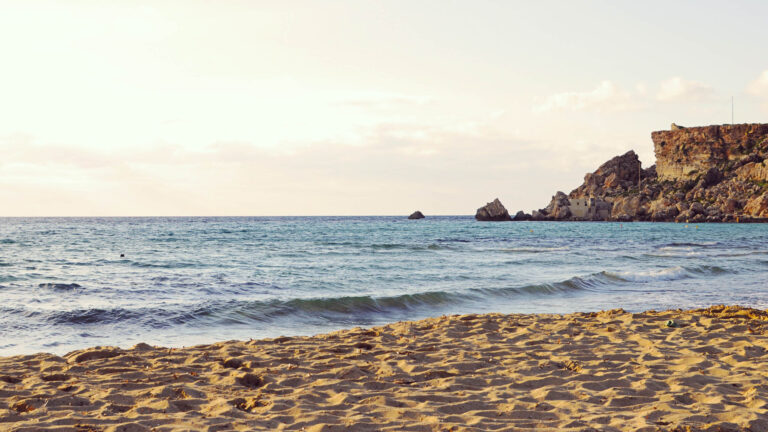
The largest sandy bays are in the northwest of Malta and in Gozo.
Golden Bay and Għajn Tuffieħa sit next to each other over one headland. Għadira is the biggest of the lot.
Ġnejna and Paradise Bay are on the same stretch of coast.
In Gozo the red sand at Ramla l-Ħamra is the one people travel for, with San Blas smaller and steeper.
Those are also the busiest, for the obvious reason. In July and August they fill early and the parking goes first.
The mixed bays
Another eleven bays record sand in a mix: sand with rock, sand with pebble, or the artificial sand at Buġibba.
Ħondoq, Xlendi and Marsalforn in Gozo are the useful ones, because they have the facilities as well.
A mixed bay usually means a small sandy strip at the head and rock along the sides. In August the strip is where everyone is.
Wind matters more than the surface
Wind decides whether a bay is swimmable far more often than the surface does.
A northwesterly closes most of the sand on the northwest coast and leaves the east side calm. There is more in the four winds.
Every bay page lists what it is made of, what facilities are there and which winds it can take.