


Parking is the single biggest argument against hiring a car in Malta. There are a lot of vehicles on a small island and the old towns were built long before cars. The spaces that exist are fought over.
A small car fits in spaces a large one cannot. That matters more than the daily rate.
Parking and the Valletta charge
What the colours mean
White bays are general parking, free, and what everyone is competing for. Blue bays are reserved in some localities for residents with a permit, often only within stated hours.
Yellow lines and hatching mean no parking, and wardens are active in the busier towns. Green bays and reserved spaces are for loading, disabled parking or specific permit holders. Read the sign rather than the paint, because the rules are set locally.
Driving in Malta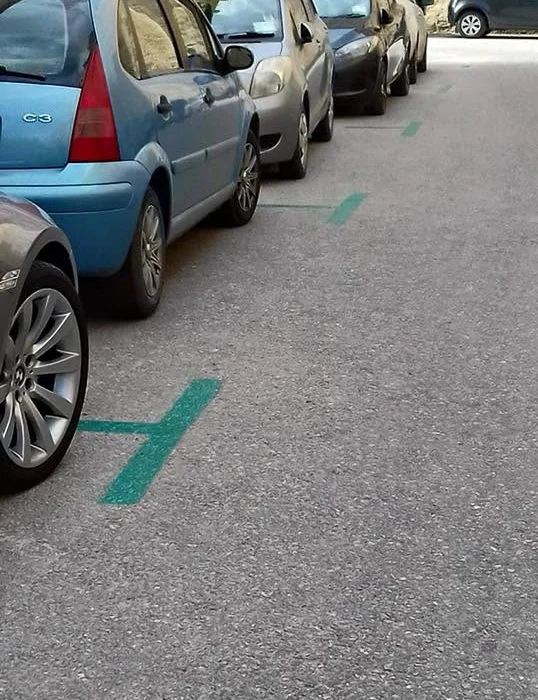
How the CVA works
Valletta has run Controlled Vehicular Access since May 2007. Cameras read your plate entering and leaving the peninsula, work out how long you stayed, and bill you afterwards. It isn’t a barrier and it isn’t a flat congestion charge: you drive in normally.
It is the CVA, not a ZTL. The official source is cva.gov.mt, which publishes the boundary, the entry points and the current tariff.
What the CVA costs
There is a daily ceiling on the charge
The first half hour is free. After that it is charged by the hour up to a daily cap. Once you reach the cap, the rest of the day is free.
Arrive after two in the afternoon on a weekday and it’s free. Weekends and public holidays are free all day. The CVA is a reason to think about when you drive in, not a reason to avoid Valletta.
What to see in Valletta
Take the ferry instead
The sensible way into Valletta is the ferry from Sliema or the Three Cities, or the bus. Driving in to hunt for a space is a poor use of a morning whatever it costs.
Multi-storey and park-and-ride facilities on the approaches take the problem away for a few euro.
Harbour ferry routes
The CVA tariff
What it costs
- First 30 minutes
- Free.
- Over 30 and up to 60 minutes
- €0.82.
- Over 60 minutes
- €0.82 per hour or part of an hour, capped at €6.52. Once you reach the cap the remaining hours are free.
- When it applies
- Monday to Friday, 08:00 to 18:00.
- When it does not
- Entry after 14:00 on a weekday is free. Saturdays, Sundays and public holidays are free all day.
Who is exempt
Exemption is automatic for emergency and official vehicles, electric and hybrid vehicles, public transport, motorcycles, and anything able to carry ten or more people. Valletta residents are exempt too. The system works this out on its own. A vehicle inside the zone for at least fifteen nights a month is treated as resident. It must be there for two hours between one and five in the morning. Nobody has to apply.
Hire cars carry Maltese plates, so the bill goes to the registered keeper. That is the hire company, and they pass it on to you with an administration fee. Ask how they handle it when you collect the car rather than finding out on your statement a month later.
Paying it
Bills come by post. You can register for e-billing or check an account online instead. Paying before the invoice arrives, or by automatic debit, takes 10 per cent off. Leaving it unpaid costs more. After 30 days the charge rises by 2 per cent or €5.82, whichever is greater. It rises another 2 per cent 30 days later, and after 90 days it doubles.
Tariffs, the exact boundary, entry and exit points, exemption procedures and payment methods are published by the scheme operator at cva.gov.mt. Tariffs are issued by Transport Malta.