


Malta runs a public health service that is free at the point of use for everyone entitled to it. There is also a large private sector, which most residents use for speed and convenience.
The two coexist rather than compete, and a lot of people move between them depending on what they need.
Public and private
Care is free at the point of use
Entitlement depends on your status: employment and national insurance contributions, an EU entitlement, or a reciprocal arrangement.
Mater Dei is the main hospital, with health centres around the islands for primary care.
Registering
Used for speed
Most residents use private care for consultations and diagnostics simply because it is faster, and insurance is common rather than exotic.
It is considerably cheaper than private care in most of northern Europe.
What things cost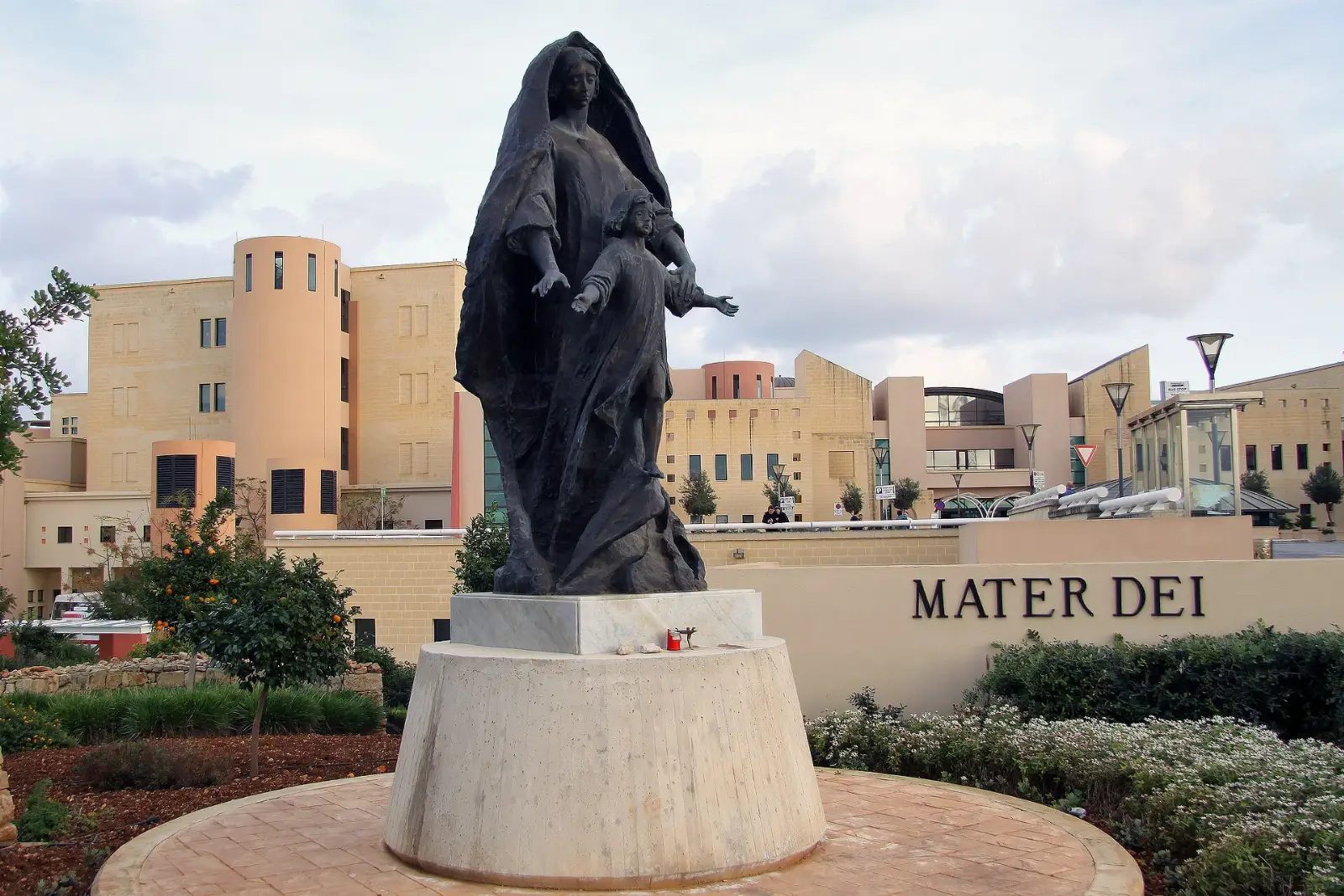
Pharmacies do a lot
Pharmacists here handle far more than in some countries and are the sensible first stop for minor things. Some stay open on Sundays and holidays, on a schedule that rotates.
The emergency number is 112. It works from any phone.
Pharmacies on Sundays and holidays
Who is entitled
And what you need to show
- Residents paying social security
- Entitled to public healthcare free of charge. Entitlement follows from paying contributions here rather than from simply living here.
- EU and EEA visitors
- A valid European Health Insurance Card gives free access at public facilities during a temporary stay. Bring the card itself or a Provisional Replacement Certificate; without documentation you will be treated as a private patient.
- Pensioners and posted workers
- If you are staying longer, register an S1 form with the competent institution in Malta. They issue a Certificate of Entitlement, and the hospital asks to see it.
- Everyone else
- Third-country nationals without a reciprocal arrangement need private health insurance. Proof of it is usually a condition of the residence permit.
It covers you as a visitor. It is not a substitute for entitlement once you move here. Relying on it after you have relocated is a common and expensive mistake. Sort out the S1 or local contributions before you need them.
How the public system is arranged
Where to go for what
- Health centres
- Ten of them across the islands, delivering more than fifty primary care services free of charge. Several run 24-hour immediate GP care for urgent problems that are not emergencies, which is the right destination for most things.
- Community clinics
- Fifty-four smaller local clinics extending the same primary care into individual towns and villages.
- Mater Dei Hospital, Msida
- The main general and teaching hospital, and where accident and emergency, specialist outpatients and inpatient care sit.
- Gozo General Hospital
- Serves Gozo, with more complex cases transferred to Mater Dei.
- Screening and specialist primary care
- A National Screening Centre runs the breast, colorectal and cervical programmes, alongside centres of excellence in primary eye screening, speech and language pathology, and podiatry.
- Telemedicine
- A 24/7 client support centre delivers advice by phone or teleconference, backed by the electronic patient record.
Pharmacies and medicines
Pharmacies are everywhere and pharmacists here are used to advising on minor problems directly, which saves a GP appointment. A different set of pharmacies stays open each Sunday and public holiday, on a schedule that rotates. See which pharmacies are open is updated daily.
People entitled to free medicines under the national schemes collect them from a community pharmacy of their choice, not from a hospital dispensary. Register for this as soon as you qualify.
Private healthcare
Private clinics and hospitals operate alongside the public system and are widely used, mainly to avoid waiting for outpatient appointments and elective procedures. Many residents hold private insurance in addition to public entitlement rather than instead of it. English is spoken throughout both systems.
The Medical Council maintains public registers of doctors and dentists, including the specialist registers. Anyone practising as a specialist must appear on the relevant register. You can look up a name, registration date and specialisation before booking. This is open to residents and visitors alike.
Where the hospitals are
Malta is small enough that no hospital is far away, but they do very different jobs. Only two of them take emergencies.
Public hospitals
- Mater Dei Hospital, Msida
- The main acute hospital for the whole country, and where accident and emergency is. Also the teaching hospital.
- Gozo General Hospital, Victoria
- The acute hospital for Gozo, with its own accident and emergency. Serious cases are moved to Mater Dei.
- Sir Anthony Mamo Oncology Centre, Msida
- Cancer care, on the Mater Dei site.
- Mount Carmel Hospital, Attard
- Mental health.
- Karin Grech Hospital, Pietà
- Rehabilitation, mostly after a stroke, a fall or surgery.
- St Vincent de Paul, Luqa
- Long-term care for older people. The largest facility of its kind on the islands.
Private hospitals and clinics
- Saint James Capua Hospital, Sliema
- The largest private hospital. Inpatient and outpatient, across most specialities.
- Saint James Hospital, Żejtun
- The group’s second hospital, covering the south.
- Saint James Clinic, Burmarrad
- A walk-in urgent care centre for the north, for things that need seeing today but are not emergencies.
- Saint James Eye Clinic, Birkirkara
- Eye surgery, mostly cataract and laser.
- Da Vinci Hospital, Birkirkara
- Private hospital and clinics, including breast care, orthopaedics and dentistry.
- Saint Thomas Hospital, Qormi
- The newest of the private hospitals, and the smallest.
- Good Samaritan Hospital, St Paul’s Bay
- Long-term and rehabilitative care rather than acute treatment.
None of the private hospitals runs an accident and emergency department. In a real emergency you go to Mater Dei or to Gozo General whatever your insurance says.
Health centres
- Open around the clock
- Floriana, Paola and Mosta have a doctor on duty at all hours. These are the ones to use at night for something urgent that is not an emergency.
- The other seven
- Gżira, Qormi, Cospicua, Kirkop, Rabat and Birkirkara on Malta, and Victoria in Gozo. Daytime and evening hours, shorter at weekends.
- What they do
- General practice, dressings, injections, blood tests, and clinics for diabetes, pregnancy and children. No appointment needed for the GP.
- Booking a clinic
- The primary health care call centre is 2123 1231.
Health centres are free to anyone entitled to public care. They are the right first stop for most things, and a great deal quicker than the emergency department.
The emergency number is 112, for ambulance, police and fire. Accident and emergency is at Mater Dei, and at Gozo General Hospital. For an urgent but not life-threatening problem, a health centre with 24-hour GP cover is faster than A&E and takes pressure off it.
Entitlement rules and the documents required are set out by the Government of Malta, and services are run by the Ministry for Health. Entitlement questions go to the Entitlement Unit rather than to a hospital.