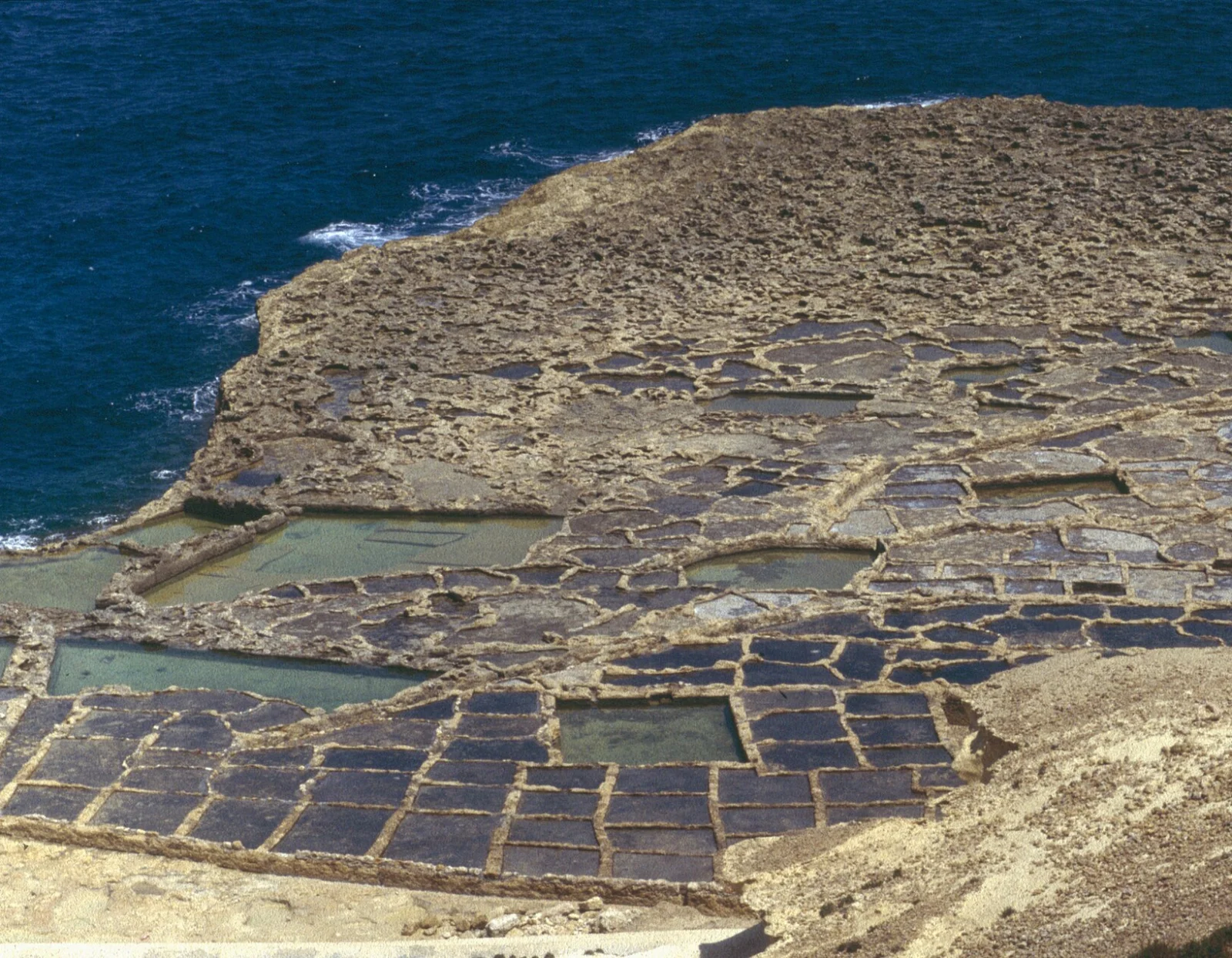
There is a stretch of coast in the north of Gozo cut into shallow squares. They are salt pans, and they are not a ruin. Families still work them every summer and sell what comes out of them by the road.
How they work
Seawater is let into the pans, either by the sea washing over the rock or by hand. The sun does the rest.
Over a few days the water evaporates and leaves a crust of salt in the bottom of each square. The salt is scraped up, rinsed, dried and bagged.
The pans are cut straight into the limestone, a few centimetres deep, in a grid that runs for a long way along the shore. There is no machinery involved at any stage.
The pans go back to the Knights
Salt has been taken off this coast since at least Roman times. The pans you walk across now are usually dated to the period of the Knights, which makes them roughly three hundred and fifty years old. Some of the same families have worked the same sections for generations.
The season runs through summer
Harvesting needs heat and dry weather, so it runs from around May to September. In winter the pans fill with rainwater and sit there. If you go in February you will see the grid but nothing happening in it.
Where they are
The best known run is between Qbajjar and Xwejni, just west of Marsalforn on the north coast of Gozo. The road runs along the top of them, so you can park and walk down.
Watch your footing. The rock is uneven, the edges are sharp and the surface is slippery when wet.
You can buy the salt
There are small stalls and a shop along that road selling it by the bag. It costs very little and it is the actual product of the pans you are standing on. Walking the pans is free.