Malta has no rivers and no lakes. It has one of the lowest amounts of fresh water per person in Europe. Everything that comes out of a tap here is either pumped up from under the ground or made from seawater.
The groundwater came first
Rain soaks through the limestone and collects in an underground layer that floats on top of denser salt water below it. That layer has been the island’s water supply for thousands of years. It is drawn up through boreholes and galleries.
It refills slowly and it can be over-pumped. Take too much and salt water moves in underneath, which is why extraction is licensed and metered.
The Wignacourt Aqueduct
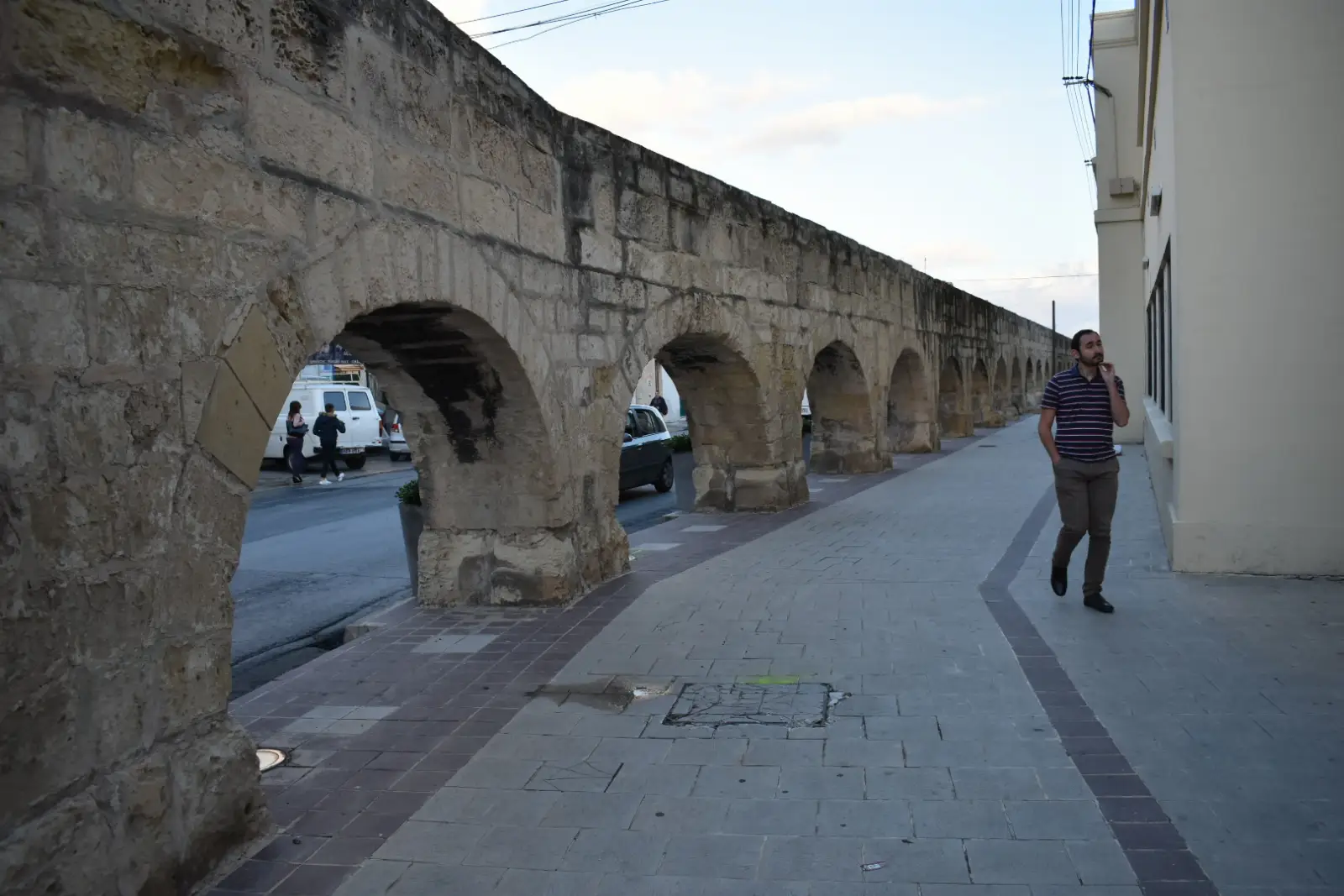
In the early 1600s Valletta was a new city with a growing population and no water of its own. Grand Master Alof de Wignacourt paid for an aqueduct to bring spring water down from the higher ground around Rabat and Dingli. It was finished around 1615.
Long sections of the arches are still standing. You drive past them between Attard and Santa Venera, running along the side of the road with traffic on both sides.
About half now comes from the sea
Malta runs reverse osmosis plants that push seawater through membranes under pressure and take the salt out. Roughly half of the public supply is produced this way. It takes a lot of electricity, which is part of why water is not cheap here.
The two sources are blended before the water reaches the tap, so what you get is a mix of both.
The tap water is safe
It is treated and tested and it meets drinking standards. Plenty of people still buy bottled water or use a filter jug.
The taste is stronger than in places with soft river water. Neither choice is wrong.
Bills, meters and how the utility accounts work are covered on the utilities page.