The EU Disability Card proves that a person has a recognised disability. Malta already issues its own version through Aġenzija Sapport (the government disability agency).
EU law will make every country honour the card for visitors from June 2028. Until then, what a card gets you in Malta depends on the venue.
What the card does
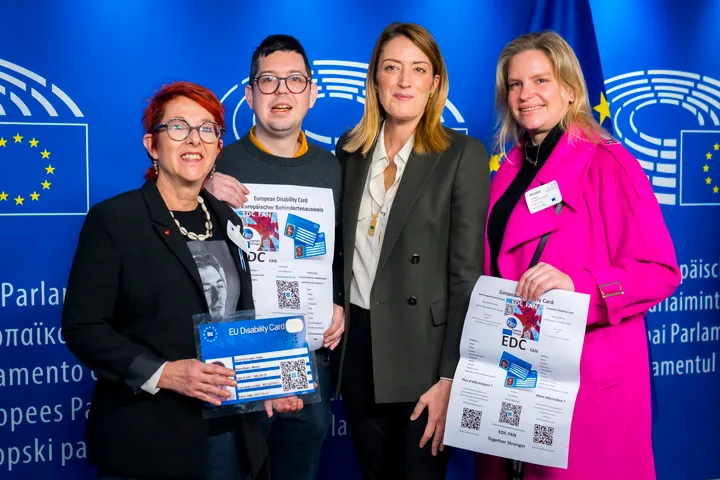
The card lets a venue or service see that the holder is entitled to special conditions for people with disabilities. These can be free entry, lower prices, priority access, personal assistance or mobility aids.
It also covers the person helping the holder, such as a personal assistant, and assistance animals.
It does not cover social security or social protection benefits.
What the card does in Malta today
Malta took part in the EU pilot project for the card, with seven other countries, and now issues it as the Malta EU Disability Card. It is not a right to free entry everywhere.
For residents, the card lets you apply for government schemes and benefits for people with disabilities. It also opens concessions that private companies and charities choose to offer.
The website eudisabilitycard.org.mt lists where the card is accepted in Malta, by category and by town. The categories include heritage, transport, leisure and wildlife.
Each scheme sets its own rules, so check with the venue before you go.
Visiting Malta with a card from another EU country
Cards issued in other EU countries can generally be used in Malta, but each venue decides what it offers. Bring the card and ask when you book or at the ticket desk.
Visitors cannot apply for a Maltese card. The application asks for a Maltese ID card, so it is for residents only.
What changes in 2028

The EU rules are in Directive (EU) 2024/2841, which entered into force in November 2024. Countries must write it into national law by 5 June 2027 and apply it from 5 June 2028.
From then, a cardholder on a short stay of up to three months must get the same special conditions as a resident with a disability. The rules also cover non-EU citizens who legally live in an EU country.
The card gets a common design, and the EU is still agreeing a digital version. Check with Sapport for any change to the Maltese card before 2028.
Parking and the Blue Badge
Malta issues the Blue Badge separately, also through Sapport. It is a legal document. Holders can use the reserved parking bays when the badge is displayed against the windscreen.
A new Blue Badge has an administration fee of €11.50. Renewals are free.
By 5 December 2029 a European Parking Card will replace national parking cards across the EU. Until then, ask Sapport before you travel whether a badge from your own country is accepted. Our guide to parking bay colours explains the bays.
How to apply if you live in Malta
Apply online at eudisabilitycard.org.mt or with the paper form from Sapport. You need:
- your Maltese ID card
- one recent passport photo, 40mm by 30mm
- a medical certificate, signed and stamped by a registered doctor and no older than one year
- the signed consent form
Sapport may ask you to attend an assessment appointment. Apply to renew three months before the card expires, because no temporary document is issued while a renewal is processed.
The Sapport Accessibility Unit is in Patri Wann Azzopardi Street, Santa Venera. The freephone number is 153 (Servizz.gov), extension 05.
Getting around Malta with a disability
The card helps with prices and priority. It does not change the ground, and many old towns are steep and stepped.
Our accessible Malta guide covers buses, ferries and which bases are flattest. The list of eleven bays with accessible facilities covers beaches.
Why this is in the news
On 17 October 2026, Roberta Metsola, the Maltese President of the European Parliament, sent a written message to the European Disability Card Fan Day in Diksmuide, Belgium.
She said people with disabilities should have the same rights across borders as at home. She asked national authorities to apply the card quickly and to improve transport infrastructure. She noted that one in four adults in Europe has a disability.
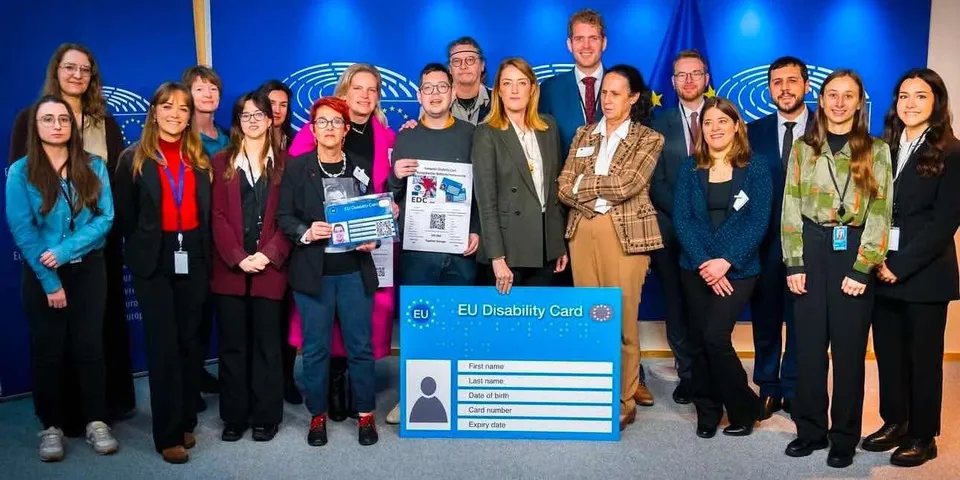
Thanks to EDC FAN Belgium, a volunteer group that campaigns for the card, for contacting us about this subject and for supplying the photographs.