Thirteen small watchtowers went up around the Maltese coast in under two years, between 1658 and 1659.
They were paid for by the Grand Master out of his own pocket.
Who built them
Martin de Redin was elected Grand Master in 1657 and put up the money himself the following spring. He died in 1660, so the towers are most of what he left behind.
The coast already had a handful of large towers built under Wignacourt and Lascaris. What it did not have was a chain close enough together to pass a warning along.
How the chain worked
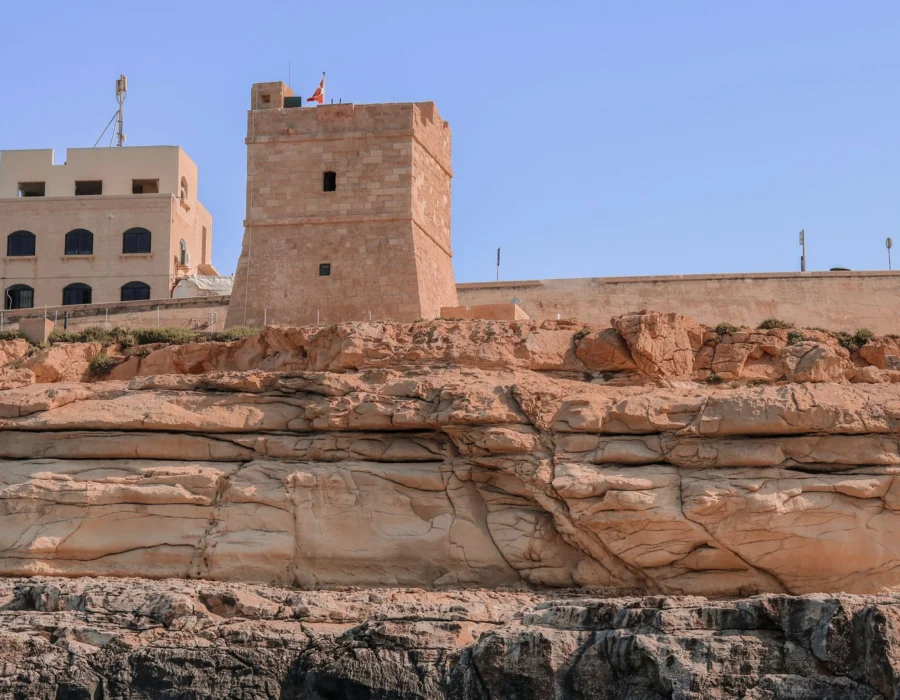
Each tower was small, square and within sight of the next.
A fire on the roof at night or smoke by day passed the message down the line to Valletta. A raid sighted in the north could be known in the harbour within the hour.
Two to four men lived in each one. They were lookouts, not forts, and were never meant to hold anyone off.
The design is the same everywhere: two storeys, a blank lower floor, a door reached by ladder or steps, and a flat roof platform.
How they differ from the earlier towers
The Wignacourt towers of the 1610s are much larger, with corner turrets and a garrison big enough to fight. Wignacourt Tower at St Paul’s Bay is the oldest still standing.
The De Redin towers are the cheap version, built for numbers rather than strength.
Thirteen small towers cost less than one large one and covered far more coast.
What is left of the thirteen
Eight of the thirteen still stand. Two are ruins and three are gone completely.
Għajn Ħadid Tower above Selmun is the best known ruin. Its upper floor came down in the 1856 earthquake and the stump is still on the ridge.
The survivors are mostly on the coast road and several are a short walk from a bus stop.
Seeing inside one
Most are locked and you look at them from the outside, which costs nothing and is usually the point of the walk.
Din l-Art Ħelwa looks after several and opens some on set days, often the first Sunday of the month.
Opening days change with the season and with the weather. Check the day before you make the trip out.
If you only see one, make it Għallis Tower on the Salina coast road. It sits right at the water and photographs well in the late afternoon.