Mdina takes about twenty minutes to walk end to end and holds fewer than three hundred residents.
During the day it carries several thousand visitors at a time.
The coaches go by late afternoon. From about six the place belongs to whoever is still inside it.
Why it works at night
There is no traffic. Only residents and a handful of permit holders may drive in, so the streets are silent in a way that is rare anywhere.
The lighting is low and warm and has not been modernised.
The limestone holds the day’s heat and the alleys stay warm after the air cools.
Walk out to the bastion wall on the north side. You can see across half the island to the sea.
On a clear night Sicily shows as a glow on the horizon, about 90km away.
What stays open
- A few restaurants, some of them on the walls with a view over the plain.
- One or two cafes near the main gate.
- The cathedral and the museums close in the late afternoon, so evening is for walking rather than visiting.
Book if you want to eat on the bastions. There are not many tables and they go.
Where to walk
Start at the Main Gate, take the first left and keep going away from the noise.
The lanes behind Villegaignon Street are the quietest, and most of them are dead ends worth walking into anyway.
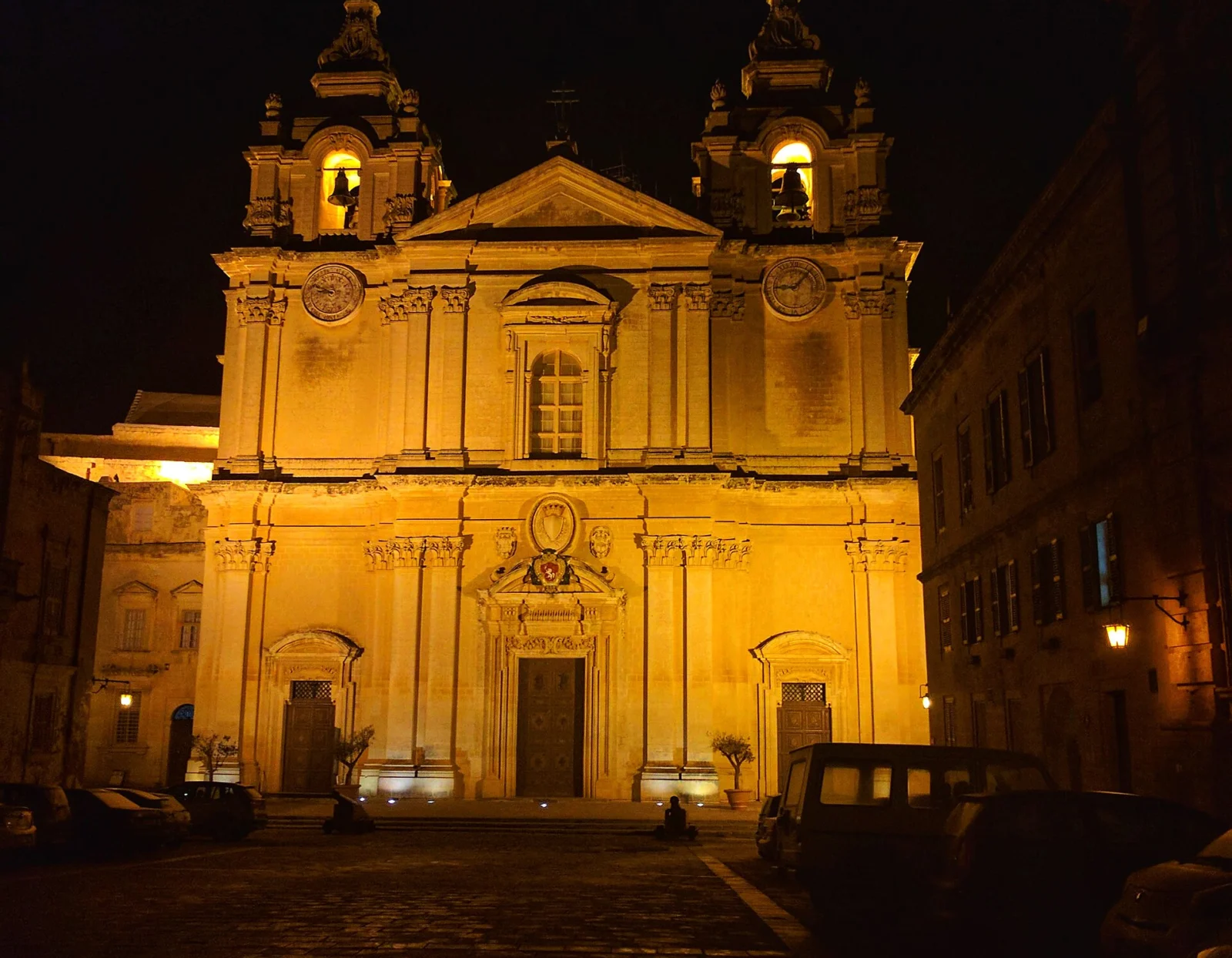
Bastion Square at the far end has the view. Palazzo Falzon and the cathedral square are lit and empty by eight.
You cannot get lost. The city is two streets deep and the wall stops you.
Getting there and back
Buses run to Rabat, just outside the gate, from Valletta and from Sliema.
The last ones back are earlier than you expect, so check before you settle in for dinner.
Parking is outside the walls and is free after the day visitors leave.
Wear something with grip. The stone is polished smooth by four hundred years of feet and it is slick in the damp.
Rabat is outside the gate
Rabat sits immediately outside the walls and is where most of the people who work in Mdina live.
It has ordinary bars and cheaper restaurants, and it is open later than anything inside.
St Paul’s Catacombs and the grotto are there too, though both are daytime visits.
A common evening is dinner inside the walls and a drink in Rabat afterwards.