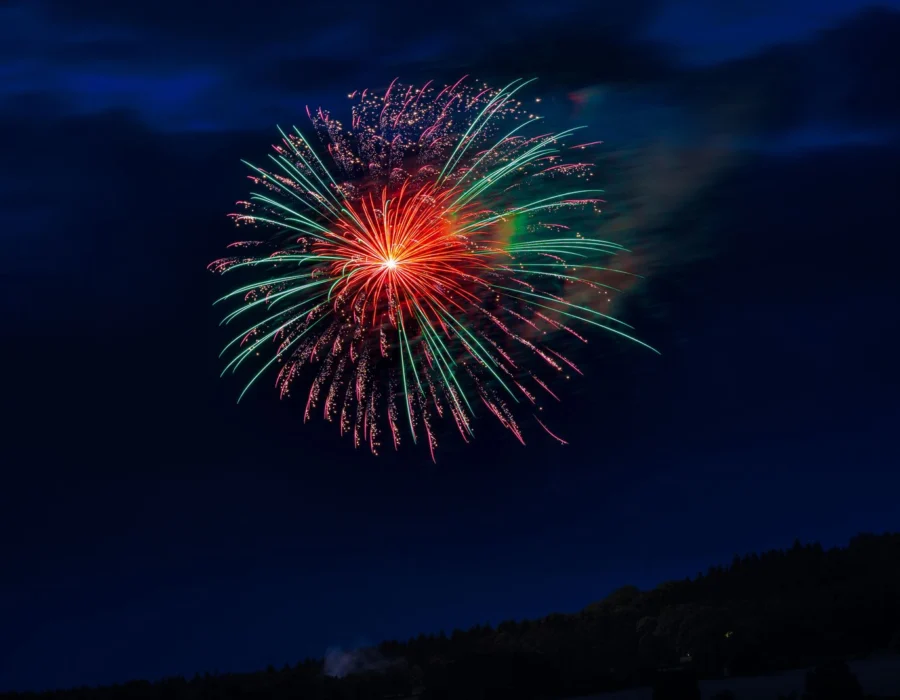
Most countries buy their fireworks in. Malta makes them.
Villages run their own fireworks factories, staffed by volunteers, and the people who work in them train for years. It is treated as a craft rather than a hobby.
The factories belong to the villages
A factory is usually tied to a band club or a feast committee. It sits out in the fields, away from housing, and it is licensed and inspected. The people making the shells have day jobs and come in during the evenings and at weekends through the year.
Everything is built for one week. A village spends twelve months preparing for its own feast and then sets almost all of it off in a few nights.
There are two kinds
Aerial fireworks are the ones you see over the rooftops, and Malta puts a lot of work into colour and timing. The other kind is nar tal-art (ground fireworks), mechanised wheels and frames that spin, throw sparks and drive each other in sequence at street level.
The barrage at the end is called the kaxxa infernali (the finale). It is loud, it is continuous and it goes on longer than visitors expect.
The competition is real
Villages compare their displays against each other, and inside a single village two band clubs often compete directly. That rivalry keeps the standard high. Nobody scales back in a quiet year.
The international festival
There is also a Malta International Fireworks Festival, with displays over the Grand Harbour. It puts the same skill on show deliberately, at a sensible hour, instead of at three in the morning during a feast.
Where to watch
For the harbour displays the Upper and Lower Barrakka Gardens and the Three Cities waterfronts opposite are free and fill up hours ahead. For village fireworks, go to the village. The feast calendar tells you which one is on.