Most people stay on the coast, in Sliema, St Julian’s or the Buġibba and Qawra strip. The other option is a village core, the old centre of an inland town. It is a different kind of stay and it costs less.
What a core is
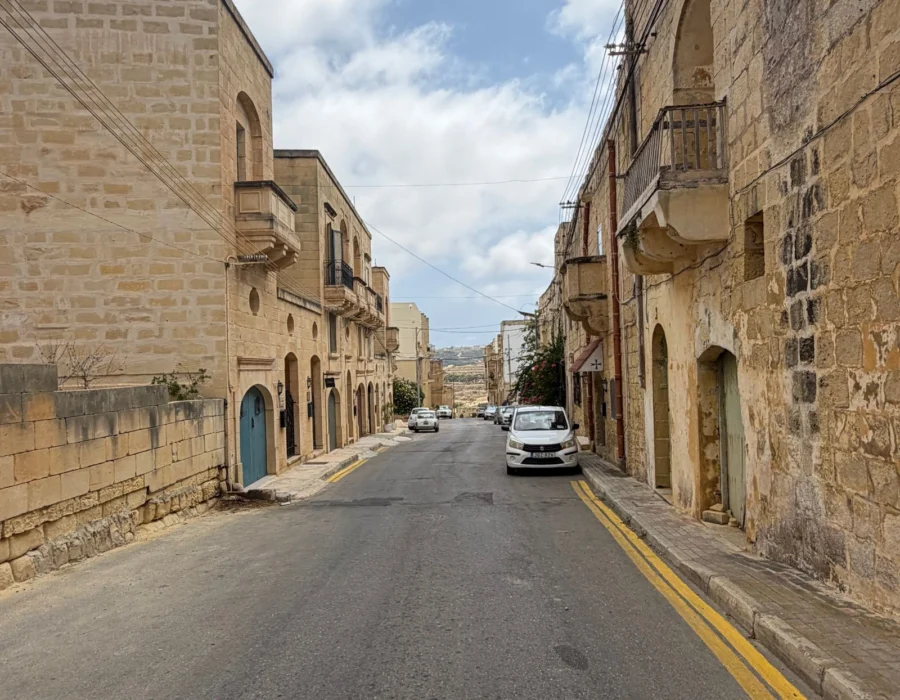
Maltese villages grew outwards from a parish church. The core is the oldest part, around that church. There is a square in front of it, narrow streets running off, and limestone houses built wall to wall.
These areas are protected, so the buildings cannot be knocked down and replaced with blocks. So the core of a village looks different from the streets around it.
What you notice walking through one
Houses have names carved over the door rather than numbers. There are small statues set into corners at first floor level.
Doors and balconies are painted in strong colours. Most streets are too narrow for two cars to pass.
There is usually a bakery, a grocer, a pharmacy and at least one band club on or near the square. The band clubs are private, but they run the village feast and most will let you in for a drink.
What is good about staying there
Rooms and apartments are cheaper than on the coast for the same size. It is quieter at night.
Shops and restaurants are priced for people who live there. You also get a much better sense of how the island runs day to day.
What is harder
Buses are less frequent than on the coast and thin out in the evening, so late nights out mean a taxi. Parking in a core is difficult and the streets are tight to drive. Fewer places cater specifically for visitors.
One week a year the village holds its feast, and that week is loud, late and full of fireworks. It is worth checking the feast calendar before you book, whether you want to sleep through it or be there for it.
Where to start looking
The Three Villages of Attard, Lija and Balzan sit in the middle of the island and are well connected. Naxxar, Rabat, Żejtun and Żebbuġ all have large intact cores.
In Gozo, look at Nadur and Xagħra. There is a fuller comparison of which area suits which trip.