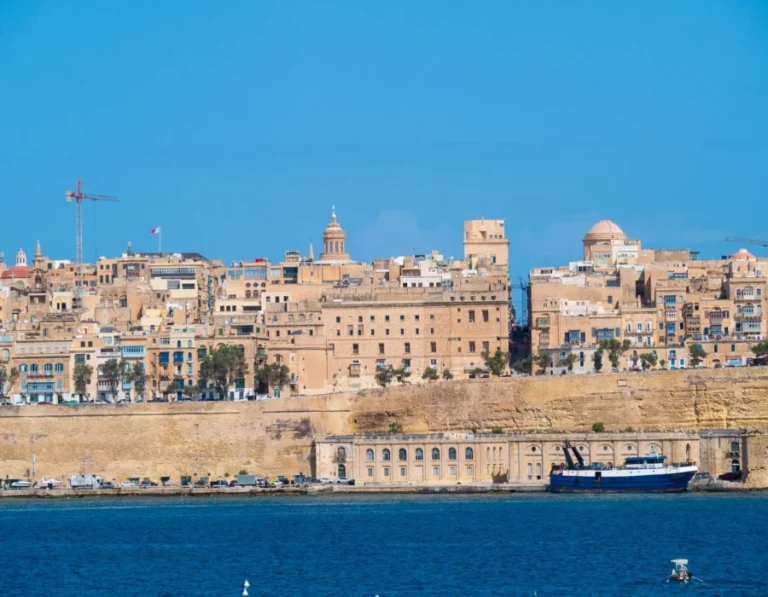
Mdina is called the Silent City and the name is accurate. Fewer than three hundred people live inside the walls and almost no cars are allowed in.
Once the coaches leave in the late afternoon there is very little noise at all. It was the capital of Malta for most of the island’s history.
Why it stopped being the capital
Mdina sits inland on high ground, which is exactly where you want a capital when the danger comes from pirates and raiders. When the Knights arrived in 1530 their power was naval, so they wanted a base on the water. They moved to Birgu on the Grand Harbour, and after 1565 they built Valletta and moved again.
Mdina kept the Maltese nobility and the cathedral. It lost the government, the money and the traffic. That is roughly the state it has stayed in since.
The name is Arabic
The Romans had a city here called Melite, which was larger and spread out over what is now Rabat as well. Under Arab rule the walls were pulled in tight around the core. The place took the name Mdina, from the Arabic word for a walled town.
Cars are restricted
Only residents, a few permit holders and horse cabs go through the main gate. Everyone else parks outside and walks in.
This is most of the reason the lanes feel the way they do. Check where to park before you drive up.
Rabat is the other half
Rabat is the town immediately outside the walls. The rest of the Roman city was there, and most of the everyday life is there now.
St Paul’s Catacombs are there. If you are going to Mdina you may as well see both, because they are a five minute walk apart.
Go early or go late
The coaches arrive mid-morning and the main street fills up. Before about ten and after about five it is close to empty, and Mdina at dusk is a different place from Mdina at noon. There are more quiet corners worth the detour across both islands.