Every village here has at least one bar that has nothing to do with tourism.
They are plain rooms with strip lighting, a fridge of beer and a television showing football or the news.
A local beer costs about €2. A coffee is €1.50. Nobody is going to hand you a cocktail menu.
How they work
You order at the counter and pay when you order. There is no table service and no tipping beyond leaving the coins.
Most open early for coffee, close in the afternoon, and open again in the evening.
The afternoon gap catches people out in summer. Between about two and five the shutter is down.
Nobody minds a visitor walking in. Say bonġu and you will get one back.
The men at the counter have been drinking there for forty years and will talk to you if you talk first.
The band club bar
Most villages have two band clubs and both run a bar downstairs.
These are usually the best of the village bars. The rooms are bigger and the walls carry a century of photographs and trophies.
Prices are the lowest in town, because the club is not trying to make money on the beer.
They are open to anyone. During the village feast they are the centre of everything.
What to order
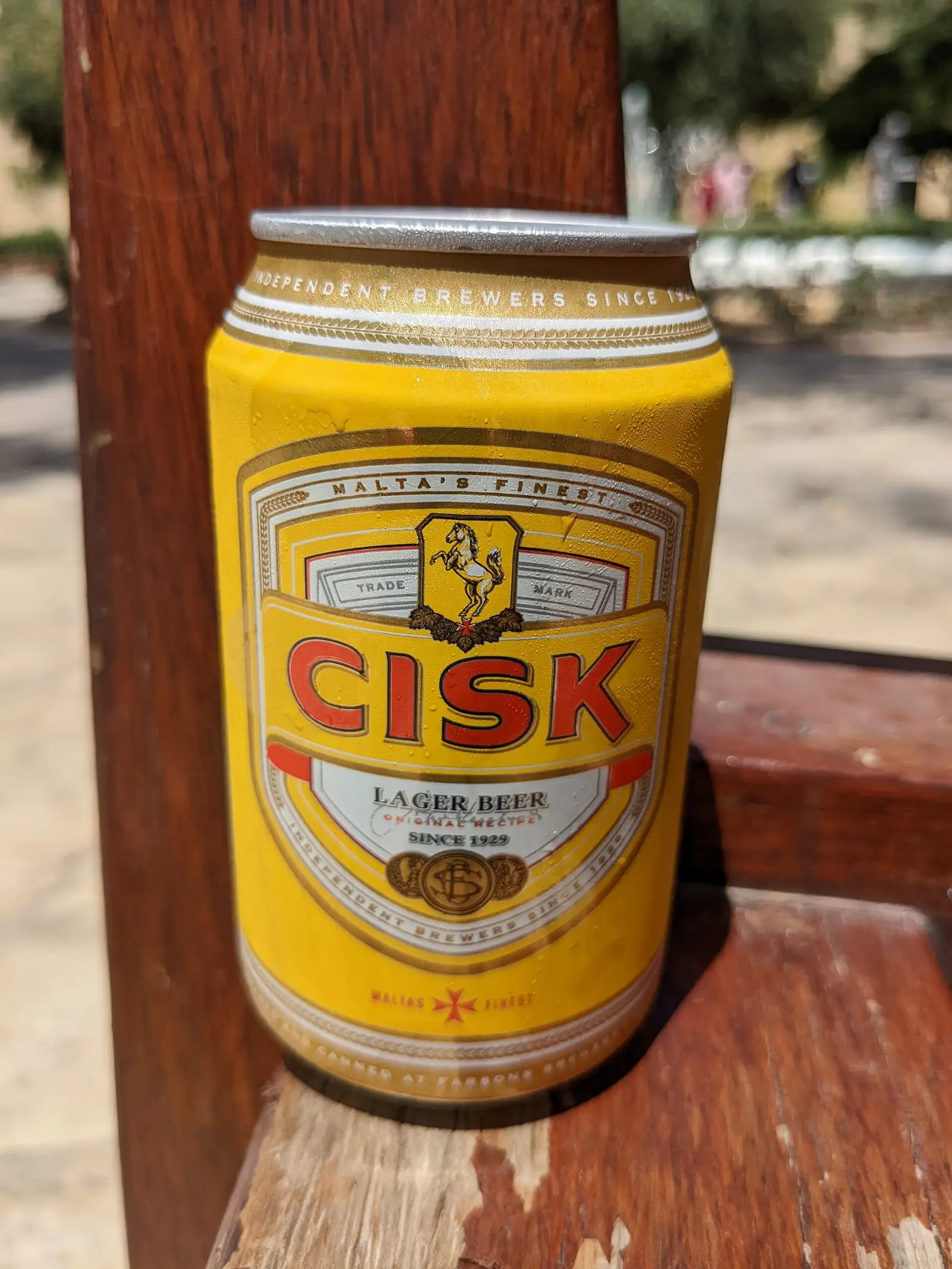
- Cisk, the local lager, on tap or in a can.
- Kinnie, a bitter orange soft drink that people either like at once or never.
- A glass of local wine, usually Ġellewża or Girgentina.
- Coffee, which here means an espresso unless you say otherwise.
There is more on all of them in what Malta drinks.
What not to expect
Food is usually crisps and nuts. A few do ħobbż biż-żejt, bread with oil and tomato, but most do not cook.
Card payment is common now but not universal in the smaller villages. Carry a note.
No music, no menu and no decoration beyond a football scarf and a picture of the parish church.
Where to find them
On the square, opposite the church, in every village on both islands.
Żebbuġ, Qormi, Nadur and Xagħra all have several within a minute of each other.
The ones on a tourist seafront are a different thing wearing the same paint. Walk two streets inland.