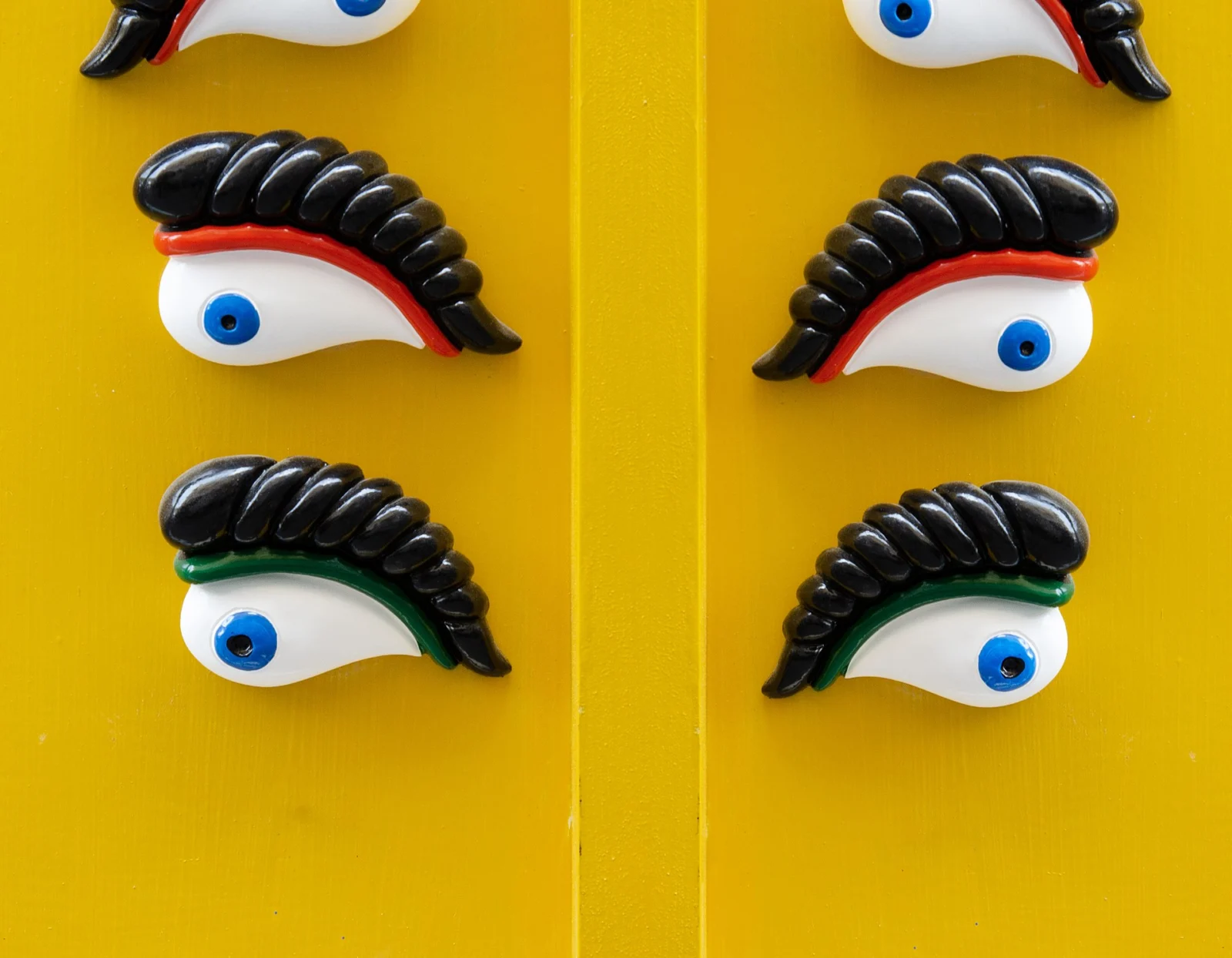
The luzzu (a traditional fishing boat) is the boat on every postcard of Malta. It is painted in blocks of yellow, red, green and blue, and it has an eye on each side of the bow. The eye is the part people ask about.
What the eye is
It is usually called the eye of Osiris. It is there to protect the boat and the men on it, and to see danger before they do. The practice is generally traced back to Phoenician boats, which carried the same marking thousands of years ago.
Whether any fisherman today believes it works is a separate question. It gets repainted anyway, because a luzzu without one does not look right.
What a luzzu is
It is a working boat, not a decoration. The hull is heavy and pointed at both ends, which lets it take a swell from behind without being swamped.
They were sailed and rowed before engines went in. A smaller version with a square stern is called a kajjik.
The colours are not random
The yellow, red, green and blue scheme is standard, and the bands are laid out in a set order along the hull. Families and villages have their own habits within that, so regulars can tell whose boat is whose from the shore.
Where to see them
Marsaxlokk in the south east has the largest concentration of them, packed into the bay in front of the village. Sunday morning is the busy time, when the market runs along the waterfront. Any other morning is quieter and the boats are still there.
You will also see them at Birgu, at St Julian’s and around the Grand Harbour. Some now run trips for visitors rather than fishing, which keeps a number of them in the water.
There are fewer than there were
Fishing has shrunk and building a wooden hull is expensive. Many of the boats you see are decades old and kept going by repair. The boats taking passengers out are part of the reason any of them are still afloat.