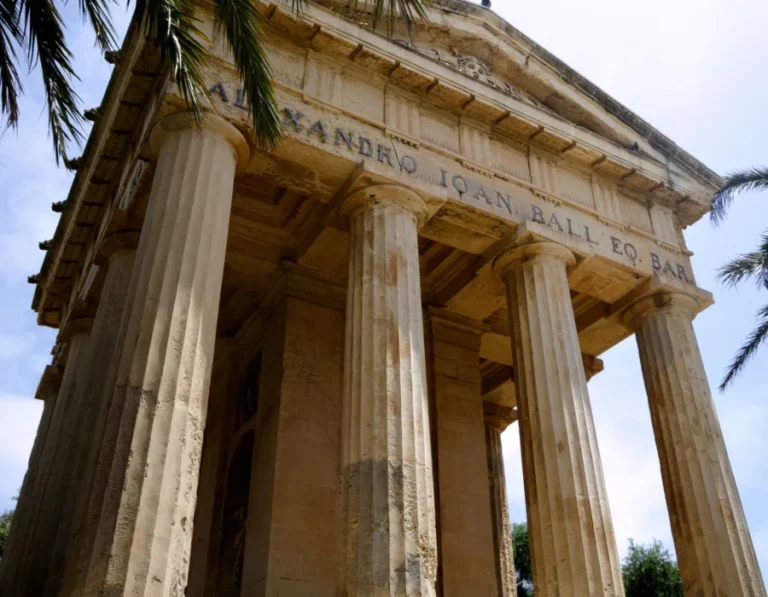
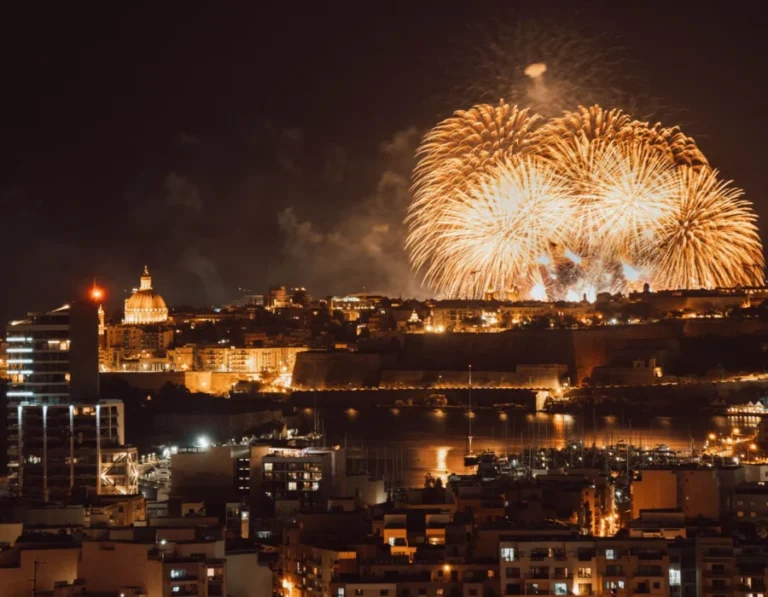
Every building in Malta is the same colour. The colour is the stone itself, not paint.
The stone comes out of the ground on the island and it has been the only real building material here for six thousand years.
Globigerina limestone
Globigerina is a soft, pale limestone laid down when the islands were under the sea. It makes up most of the low ground in the south and centre.
It comes out of the quarry soft enough to cut with a hand saw, and it hardens as it dries in the air.
That made it cheap to build with and easy to carve, which is why even ordinary houses have decorated door frames.
The harder stone above it
The other layer is Upper Coralline limestone, the hard grey rock that forms the cliffs at Dingli and the tops of the Gozo hills.
It is too hard to carve easily, so it went into walls, rubble and the base courses of fortifications rather than into facades.
You see the soft stone on the house. The hard stone sits under it, holding the island up.
Why it goes darker with age
Fresh stone is pale, almost white in the sun. It weathers to honey, then to a grey brown near the sea where salt gets into the surface.
A building that looks black at the bottom and gold at the top has simply been standing a long time.
Salt weathering also eats old walls into a honeycomb pattern. Coastal towns like Marsaxlokk and Senglea show it worst.
The rule that keeps it that way
Planning rules require limestone facing in the older cores. In Mdina and Valletta the requirement is strict and it covers apertures and balconies too.
New blocks outside those areas often use a thin limestone facing over concrete. From the street it reads the same.
Local quarries still supply the stone, mostly from the Siġġiewi and Mqabba area.
Where to see it worked
Look at door surrounds, corner stones and the underside of balconies in any village core.
The same patterns repeat because the same few families of masons cut them, working from templates handed down.
For the extreme version, the Mdina and Valletta palace facades were cut by the Order’s own masons and the detail is far deeper.
The Ħaġar Qim temples are the oldest use of the same stone. Five thousand years of weather have rounded them to nothing in places.