Ġgantija sits at Xagħra in Gozo and was built around 3600 BC. That makes it about a thousand years older than the pyramids at Giza and older than Stonehenge. It is one of the oldest free-standing buildings left standing anywhere in the world.
What a thousand years older means
The Great Pyramid went up around 2560 BC. By then Ġgantija had already been standing for roughly a thousand years.
The people who built it had no metal tools. Every block was cut, dragged and levered into place using stone, wood and rope.
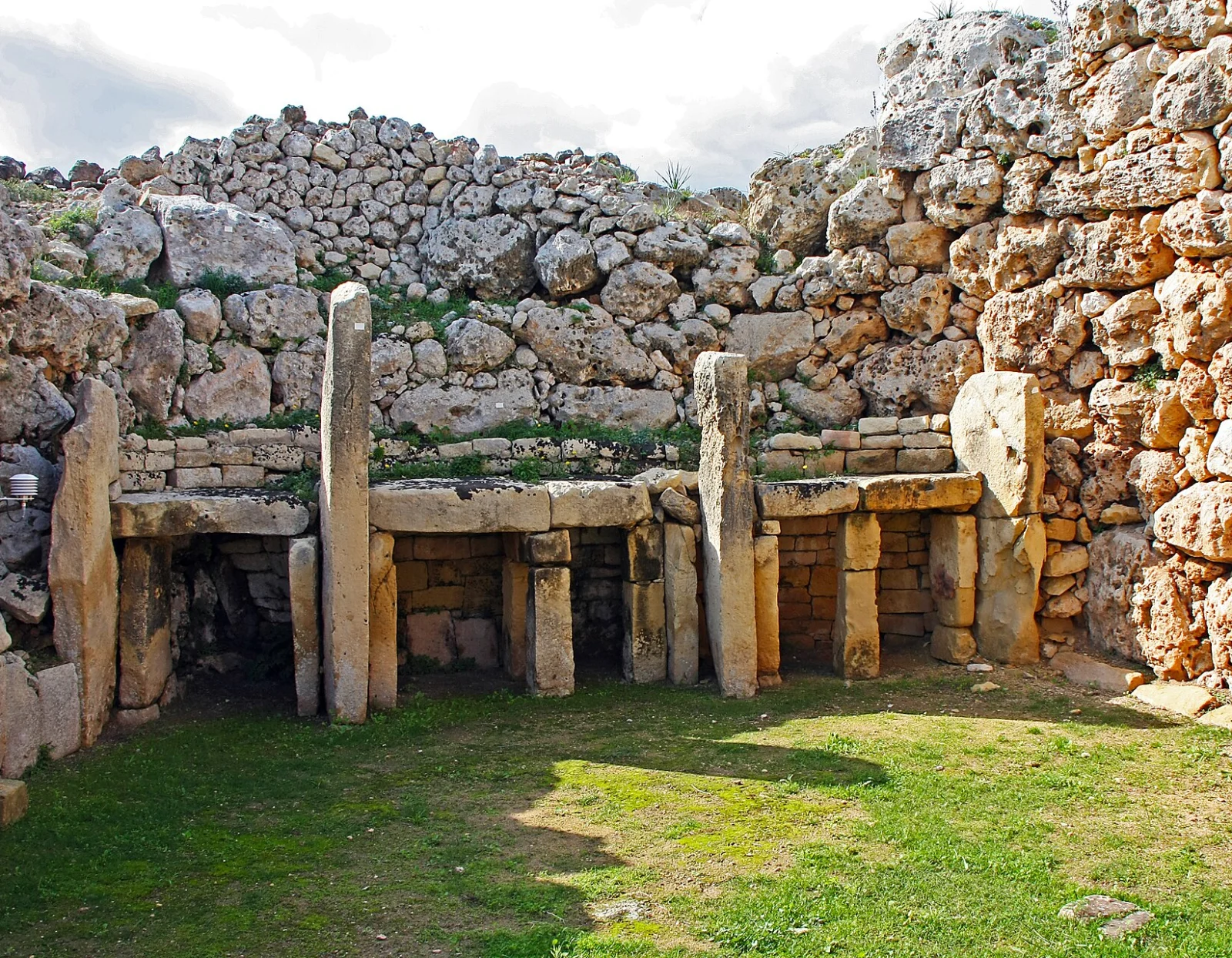
Some of the stones are over five metres long and weigh dozens of tonnes. Nobody knows exactly how they were moved. Stone balls found at temple sites in Malta suggest the blocks were rolled.
Why it is called Ġgantija
The name comes from ġgant (giant). The local story was that a giantess carried the stones up to the hill and built the place herself. The name stayed, and it is still what the site is called.
What you see there
There are two temples side by side inside a single outer wall. The southern one is the older and the larger of the two. Both keep the same rough shape, a passage running in from the front with rounded chambers opening off it.
It is a ruin, so there is no roof and the walls stop at various heights. Go for the size of the stones. Standing next to the outer wall gives you that better than a photograph does.
Ġgantija is one of seven on the UNESCO list
Ġgantija is part of the Megalithic Temples of Malta, which are a UNESCO World Heritage Site. The others are Ħaġar Qim, Mnajdra, Tarxien, Ta’ Ħaġrat and Skorba, all on the main island. There is a rundown of all of them and which are worth your time.
Getting there
Xagħra is inland in Gozo, a short bus ride or drive from the Mġarr ferry. The same ticket also covers the Ta’ Kola windmill next door, which is a two minute walk and worth the detour. Current prices for every site are on one page.
Tickets and current opening hours are on the Heritage Malta page for the Ġgantija Archaeological Park.