


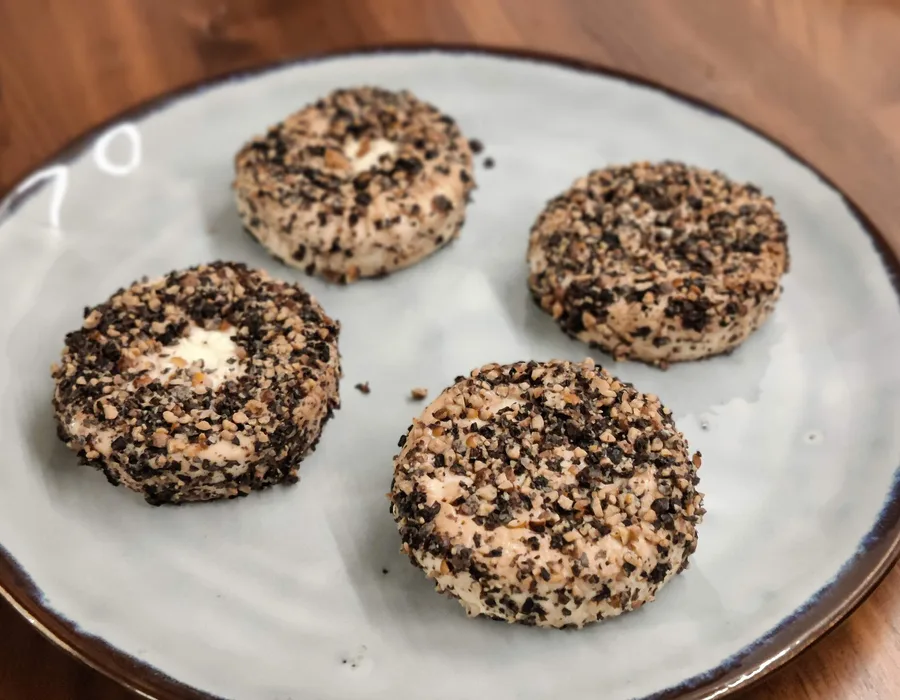
Ġbejniet are small round cheeses made from sheep or goat milk. They turn up on menus in four different states, and they taste like four different things.
The word is plural. One of them is a ġbejna.
Fresh (friski)
White, soft and mild, eaten within a day or two of being made.
Served with bread and tomato, or in a salad. This is the one that surprises people who expect something strong.
Dried (moxxi)
Left to dry until firm and pale yellow. Sharper, saltier, and hard enough to grate.
Dried ġbejniet go into a baked pasta or on top of a soup. They keep for weeks.
Peppered (tal-bżar)
Dried, then rolled in cracked black pepper until the outside is black.
Strong, and the one you will see on every Maltese platter. If a plate of them looks burnt, that is pepper.
In oil and vinegar
Kept in jars, sometimes with herbs or chilli.
Softer than the dried kind and quite sour. Sold in village shops and markets, and it travels home better than the fresh ones do.
Where they come from
Gozo makes most of them, and small farms still supply village shops directly.
Buy them at a market rather than a supermarket if you want the fresh ones. The Sunday market in Victoria and the roadside farm shops around Xagħra and Nadur are the reliable places.
Expect to pay very little. They are an everyday food here rather than a delicacy.
How to eat them
- On a Maltese platter with bigilla, kapunata, olives and bread.
- In ħobż biż-żejt, crumbled over the tomato and oil.
- In ravjul, the local ravioli, which is filled with fresh ġbejniet rather than ricotta.
- Grated over kusksu, the broad bean and pasta soup eaten in spring.
If you only try one, make it the peppered version. It is the most distinctly Maltese of the four.


