Walk through any old village in Malta and you will pass a statue set into the corner of a building, above head height. Most have a small light burning under them.
There are hundreds of them.
What they are
They are niches, called niċċa in Maltese, built into the wall at the junction of two streets.
Most hold a saint, a Madonna or a crucifix. Many were put up by the family who owned the house, and some carry a date and a name cut into the stone.
The oldest surviving ones date from the 17th century. Plenty are far newer than they look.
Why they are always on a corner
Before street lighting, the lamp under a niche was the light on the corner.
It marked the turn, it lit the step, and it was there for anyone walking home in the dark. The religious purpose and the practical one were the same thing.
Some also mark a parish boundary, or the spot where a procession turns.
Somebody still looks after them
Somebody changes the flowers and somebody pays for the bulb.
Usually it is the family in the house below, and the job passes down with the property. Some niches have been lit by the same family for generations.
In feast week the niches along the procession route are lit up and decorated with the rest of the street.
Where to see the best ones
- Birgu and Senglea: the narrow streets behind the waterfront have the highest concentration.
- Qormi: a large old core and plenty of dated examples.
- Rabat and Mdina: some of the oldest and most elaborate.
- Valletta: on the side streets rather than the main ones.
Look up as you turn a corner rather than straight ahead. Most people walk past them for no other reason.
The other things above head height
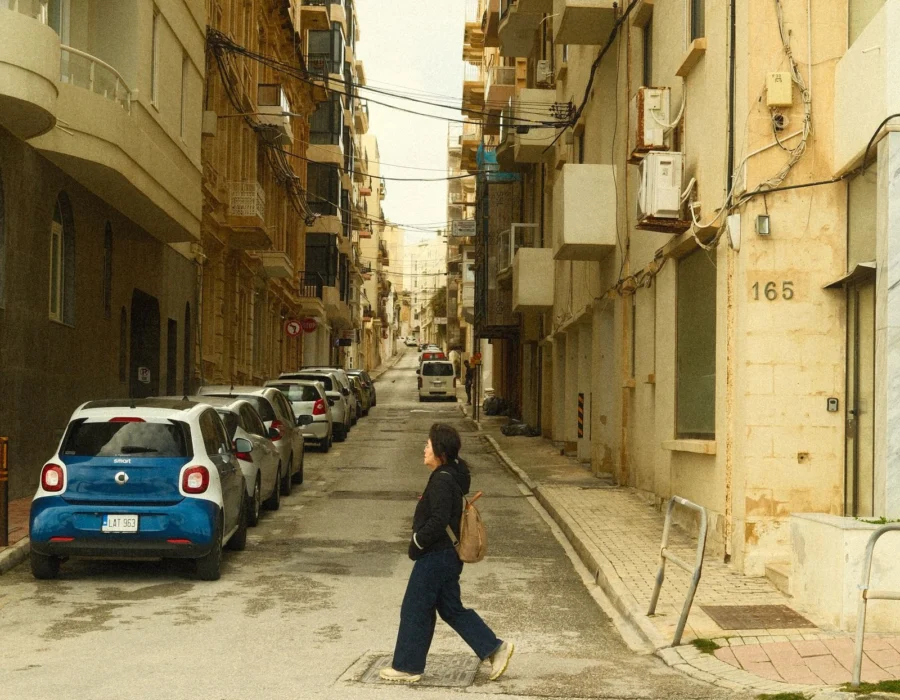
Old villages also carry carved house names above doors, and British-era post boxes and street signs in Maltese and English.
Street name plates often give the saint’s name in full, which is how you work out which parish you are standing in.