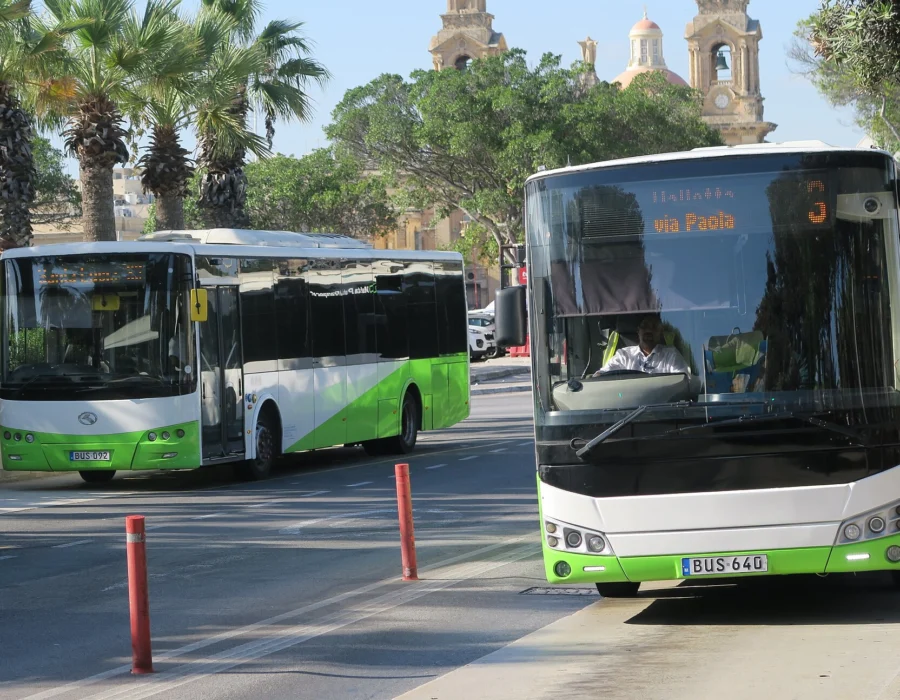
Buses in Malta are free, but not for you.
Since October 2022 anyone living here with a personalised Tallinja card taps on and pays nothing. Visitors pay a fare.
How the free travel works
The card has to be the personalised kind, with a name and photo on it, and it is issued to residents.
There is no credit to top up for ordinary journeys. You tap on boarding and nothing is deducted.
Day routes, night routes and special services are all covered.
Applying takes a photo, an ID number and a few weeks by post. Do it in your first month here rather than your sixth.
What visitors pay
A flat single fare, whatever the distance, valid for two hours of travel.
It costs more in summer than in winter, because there is a seasonal rate.
Pay in cash or tap a contactless card as you board. Keep the ticket if you plan to change buses inside the two hours.
Drivers take cash but will not thank you for a fifty. Bring coins.
The visitor cards
There are prepaid cards aimed at tourists, sold at the airport and online.
They only save money if you are on and off buses several times a day.
For two or three trips a day, paying as you board is simpler and costs about the same.
The Explore card covers unlimited travel for a set number of days and makes sense on a packed sightseeing week, not on a beach holiday.
What free travel did to the network
Free travel put a lot more people on the buses.
On the northern beach routes in July and August that shows, and a full bus does not stop.
Board at an interchange rather than halfway along the route. Valletta, the airport, Mater Dei and Buġibba are where buses start empty.
Going to Golden Bay or Għadira on a Sunday in August, leave early or take the car.
Practical notes
The Tallinja app shows live arrivals and is more accurate than the timetable at the stop.
Night routes run on Friday and Saturday from Valletta and Paceville, roughly hourly.
Hold your arm out. Buses do not stop at a stop unless somebody signals or somebody is getting off.